# Physical Storage components
Based on the required performance either solid-state disks or hard disk drives can be used, where it is consumed by Google Anthos Bare Metal deployment and optionally by compute nodes as boot devices. Google Anthos User Cluster runs the worker nodes on HPE ProLiant DL385 Gen10 Plus server's which provides an option to leverage Persistent Volume (PV) for containers using the Local Persistent Volume and leverage Persistent Volume (PV) for containers using HPE Nimble Storage Array using iSCSI along with HPE Container Storage Interface for Kubernetes
# HPE Container Storage Interface
The HPE CSI Driver is a multi-vendor and multi-backend driver where each implementation has a Container Storage Provider (CSP). The HPE CSI Driver allows any vendor or project to develop its own Container Storage Provider by using the CSP specification. This makes it very easy for third parties to integrate their storage solution into Kubernetes as all the intricacies are taken care of by the HPE CSI Driver.
The CSI specification includes constructs to manage snapshots as native Kubernetes objects and create new Persistent Volume Claims (PVCs) by referencing those objects. Other capabilities include PVC expansion, inline ephemeral volume, and the ability to present storage to pods.
# HPE Nimble Storage Array Integration
Persistent volumes for Google Anthos User clusters are seamlessly available from the native persistent with HPE Nimble Storage array using the storage interface driver (CSI). The HPE CSI Driver for Kubernetes allows you to use a Container Storage Provider to perform data management operations on storage resources such as HPE Nimble Storage Array. The Persistent volume setup using HPE CSI Driver must be installed on every User cluster within Google Anthos Baremetal deployment. Also, the additional physical network connectivity must be established between the k8s worker nodes and HPE Nimble storage array on the appropriate VLAN. The high-level overview of installing the HPE CSI Driver in every k8s cluster is as shown:
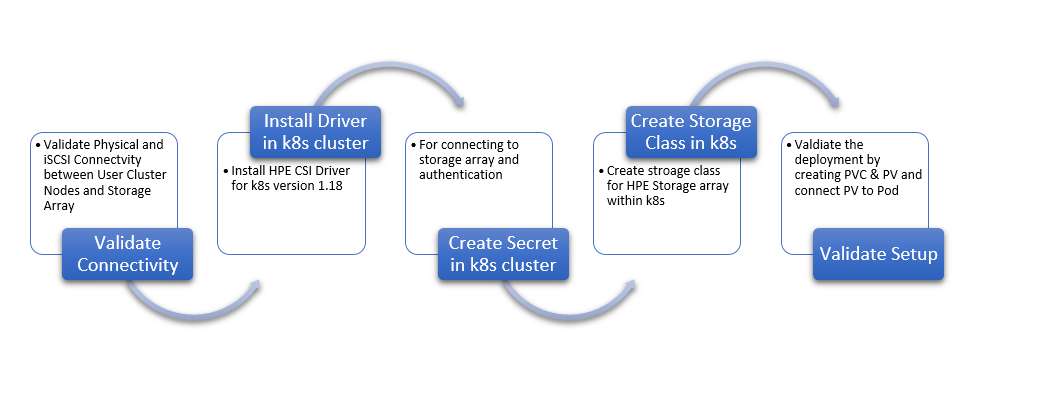
Figure 6: HPE Nimble Storage Array Integration Flow